

Your Substack Doesn’t Need More Subscribers. It Needs More Connection.
Why the writers building real relationships with their readers are the ones who last.

Let me ask you something.
When was the last time you got a reply to one of your Substack posts that actually stopped you in your tracks? Not a “Great post!” or a quick emoji reaction. I’m talking about a reply where someone told you exactly how your words landed for them. Where they shared a piece of their own story in return. Where it felt less like content consumption and more like a real conversation.
If you can’t remember the last time that happened, you’re not alone. And I think I know why.
Too many of us are writing at our readers instead of writing with them. We’re optimizing for subscriber counts when we should be optimizing for the conversations those subscribers actually want to have.
The Subscriber Count Trap
Here’s the thing. If I had to name the single biggest mistake I see writers and creators make on Substack, it’s this: prioritizing growth metrics over meaningful connection. We get so locked into watching that subscriber number tick up that we forget what makes a newsletter worth reading in the first place.
Think about two scenarios for a second.
Scenario A: You have 10,000 subscribers. Your open rate looks solid. But your comments section is a ghost town. Nobody replies. Nobody shares your posts with friends. You’re essentially writing into a void that happens to have a big number attached to it.
Scenario B: You have 1,000 subscribers. Your open rate is strong because the people on your list actually care. Your comments section is alive with real conversation. Readers are forwarding your posts to colleagues. People DM you on social media to tell you how a specific piece changed how they approach their work.
Which newsletter would you rather write? Which one is actually going somewhere?
For journalists, sports writers, and creative professionals, especially, depth of connection is everything. Your readers aren’t looking for another content machine in their inbox. They’re looking for a voice they trust. A person they feel like they know.
How Real Reader Relationships Actually Form
This is something I explore deeply in Social Media SYNC, and it’s been a game changer for how I think about showing up online: meaningful engagement isn’t something you can manufacture. It emerges naturally when the relationship foundation is solid.
The way I see it, reader relationships follow a real progression. And it maps almost perfectly to how trust works in real life:
First, recognition. Not just “I’ve seen this name in my inbox before.” Deeper than that. Your readers start to sense your authentic humanity through your writing. They can feel the difference between a newsletter written by a real person and one that reads like it was optimized by a growth playbook. This is why writing in your natural voice matters so much on Substack. Readers are choosing to let you into their inbox. That’s personal.
Then, relevance. A reader goes from “I recognize this person” to “This actually speaks to my life.” For sports writers, maybe that’s the moment a reader realizes you see the game the way they do. For journalists, it’s when someone feels like you’re asking the questions they’ve been thinking about. That shift from passive reading to active attention only happens when your content connects to something real in their experience.
Finally, reciprocity. This is where everything changes. When readers see that their comments get thoughtful responses. When they notice their feedback actually shapes your future posts. When they feel like they’re part of a conversation, not just an audience. That’s when subscribers become a community. And communities sustain newsletters in ways that subscriber counts never can.
The data supports this, too. Research published in the Journal of Marketing found that people who feel emotionally connected to a brand are 52% more valuable than those who are just satisfied. Deloitte found that community-driven organizations are 60% more effective than those that don’t prioritize connection.
Replace “brand” with “newsletter” and “organization” with “writer,” and the lesson is clear: relationships drive results. Not the other way around.
What Connection-First Writing Looks Like on Substack
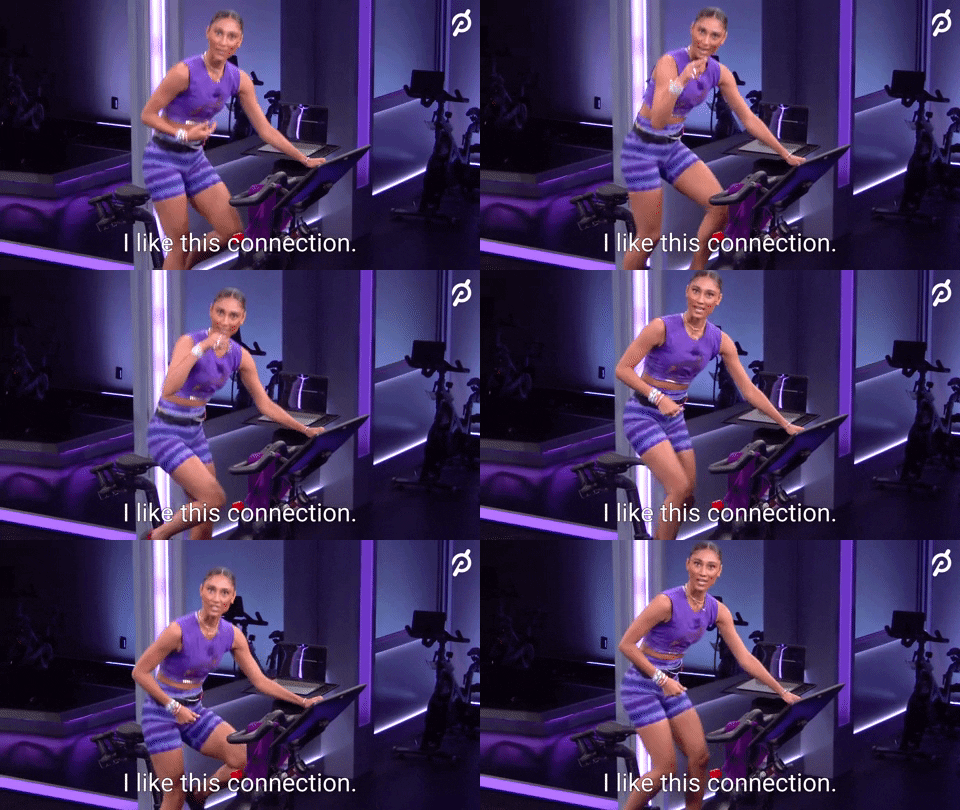
So what does this actually look like in practice? Here are a few shifts I’d encourage:
Write like you’re emailing one person. The best Substack newsletters don’t feel like broadcasts. They feel like a letter from a smart friend. Drop the “content creator” voice and write how you actually talk. If you’re a sports writer, write like you’re breaking something down for your buddy at the bar. If you’re a journalist, write like you’re explaining what you found to a curious colleague over coffee.
Respond to every comment like it matters (because it does). When someone takes time to write a thoughtful reply to your newsletter, that’s a gift. Treat it like one. A two-sentence response that shows you actually read what they said builds more loyalty than any growth hack ever could.
Track the right signals. Instead of refreshing your subscriber count, pay attention to: How many comments turn into real back-and-forth conversations? Are the same readers showing up consistently? Are people forwarding your posts to others? Those signals tell you way more about the health of your newsletter than any dashboard number.
The Long Game
There’s a proverb I come back to all the time: the best time to plant a tree was twenty years ago. The second best time is now.
Building a newsletter on Substack works the same way. The seeds you plant today in genuine conversations, thoughtful replies, and writing that comes from a real place... they grow into something no viral moment can replicate.
So the next time you sit down to write, ask yourself this: Am I writing to grow my subscriber count? Or am I writing to connect with the people already here?
Connection before conversion. Every single time.
Because when your readers feel genuinely connected to you, not your content strategy, not your posting schedule, but you, the growth takes care of itself.
Stay in SYNC,
Robin Nathaniel
Author, Social Media SYNC: A Framework for Intentional Human Connection in the AI Era
Robin Nathaniel AKA Robbin Marx
TEDx Speaker | Award Winning Author & Social Media Strategist | Gold Telly Award Winner | Davey Award Winner | Two-Time W3 Award Winner
Experience: NBC Sports - Rotoworld, Hashtag Basketball, vidIQ, Fantasy Sports Writers Association
FOLLOW ON ALL SOCIAL MEDIA PLATFORMS: @robbinmarx @bleavinfantasy